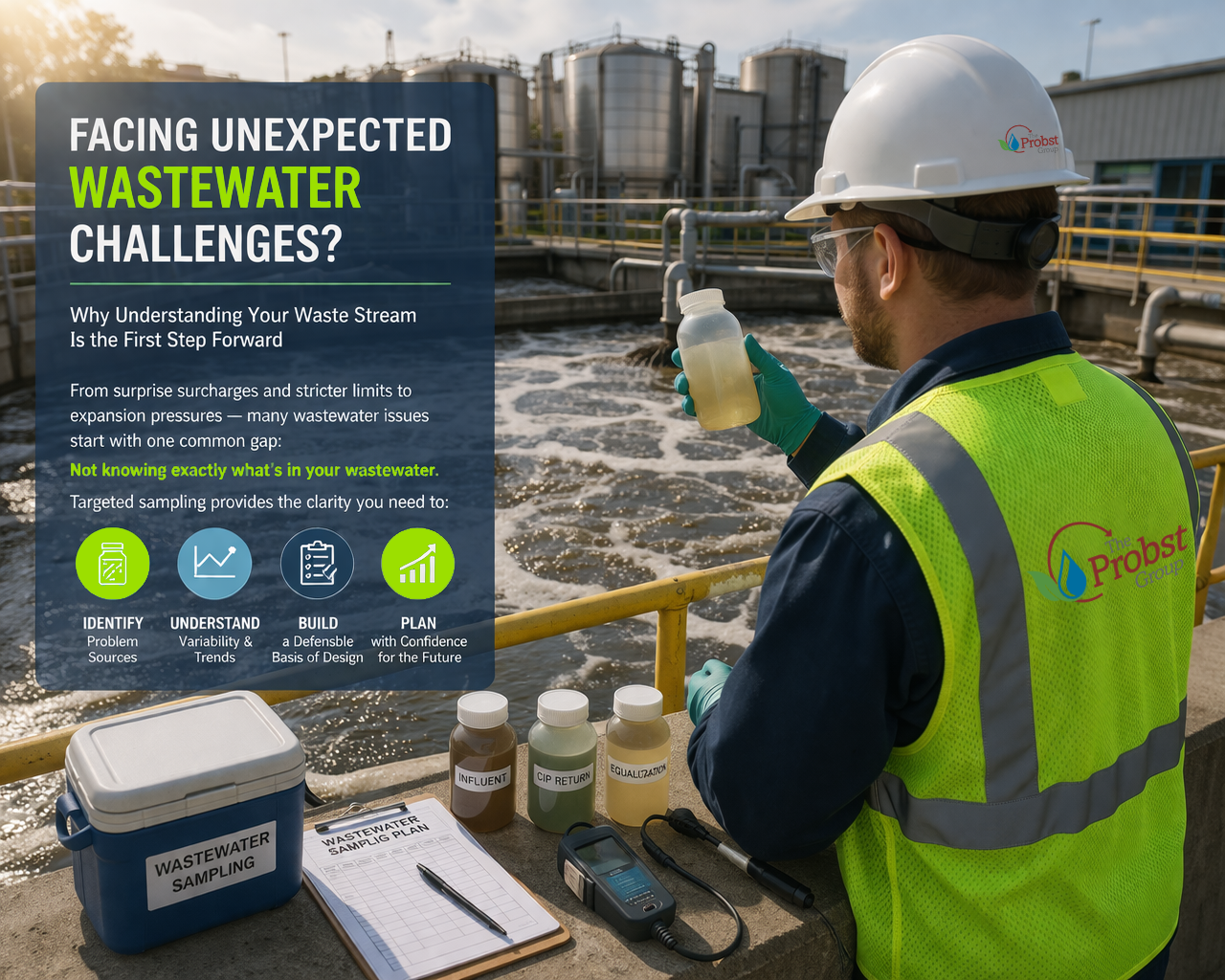

Why Understanding Your Wastestream is the First Step Forward
For food and beverage manufacturers, wastewater challenges rarely arrive with much warning.
One day, everything seems routine. The next, you’re facing unexpected surcharges, stricter discharge limits, a compliance notice, or pressure to plan for an expansion that your current treatment system may not be ready to handle. When that happens, wastewater treatment can quickly feel overwhelming - not because solutions don’t exist, but because it’s not always clear where to start.
The reality is that many wastewater problems aren’t caused by sudden system failure. They’re caused by gaps in understanding — incomplete data, outdated assumptions, or a lack of clarity around what’s actually coming from the production facility.
Wastewater generated by food and beverage manufacturers is highly variable and uniquely complex. Even facilities with similar products can generate dramatically different waste streams depending on production schedules, cleaning practices, seasonal shifts, and raw materials.
Some of the most common parameters that drive challenges include:
• pH – Sudden swings from CIP cycles or ingredient changes can create biological stress or trigger permit violations.
• Chlorides – Increasingly regulated and difficult to remove, especially for facilities discharging to municipal systems.
• Phosphorus – Often tied to cleaning chemicals, additives, or raw materials and subject to tightening limits.
• TSS (Total Suspended Solids) – Can fluctuate with production changes, leading to solids handling and surcharge issues.
• BOD/COD – High-strength organics can overwhelm biological systems or exceed POTW capacity agreements.
When these parameters aren’t well understood — or when they change unexpectedly — facilities often find themselves reacting instead of planning.
A common response to wastewater issues is to jump straight to a quick-fix: new equipment, add on treatment processes, or chemical programs. While those tools can be effective, they’re rarely successful without one critical foundation:
A clear, accurate understanding of your unique wastewater.
Without that, it’s like driving at night with your headlights off - you may keep moving, but you’re reacting at the last possible moment, and every turn feels risky.
Before evaluating treatment upgrades or compliance strategies, facilities need to answer some fundamental questions:
• Where are problem parameters originating?
• How do flows and loads change over time — hourly, daily, seasonally?
• Which streams drive surcharges, compliance risk, or biological stress?
• How do current conditions compare to municipal limits and future regulatory trends?
Those answers don’t come from a single grab sample or an old study. They come from intentional, well designed sampling efforts.
Effective wastewater sampling is not just about collecting data - it’s about collecting the right data.
Knowing where to sample, how often, and which parameters matter most is critical. Poor sampling plans can create misleading results that either overstate risk or mask real problems entirely.
At The Probst Group, wastewater sampling events are designed to help facilities:
• Identify specific sources of high strength or problematic waste streams
• Understand variability tied to operations, cleaning, and production cycles
• Establish a defensible basis of design for permitting, planning, or system upgrades
• Compare basis of design to current and anticipated future limits
This information becomes the foundation for better decisions, and better solutions - whether that’s negotiating with a municipality, planning an expansion, or evaluating treatment alternatives.
When facilities take the time to truly understand their wastewater, the conversation changes.
Not only are we able to address the immediate problems and concerns, but also consider the most effective solutions for the future.
That shift allows operators and owners to:
• Reduce surprise costs and compliance risk
• Prioritize capital investments more confidently
• Align wastewater strategy with production and growth plans
• Engage regulators and municipalities with better data and clarity
Wastewater challenges don’t stop at sampling and developing a basis of design - they evolve into questions around permitting, alternatives analysis, and treatment options that fit both operational and regulatory realities.
If wastewater uncertainty is creating risk or limiting your ability to plan ahead, it may be time to turn the headlights on. Contact The Probst Group to schedule an initial wastewater evaluation and start building clarity — before the next surprise hits
